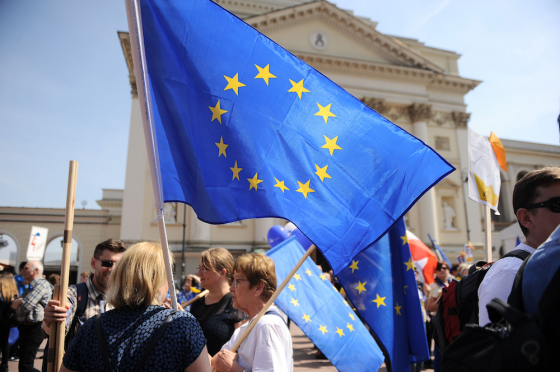
Ukraine’s culture and values are connected with Europe. We are united with Europe not only by location, but also by a common path. That is why the Ukrainian Day of Europe was established. The holiday was founded by a decree of President Leonid Kuchma in 2003. Europe Day is celebrated annually in Ukraine on the third Saturday in May. This year, the celebration of Europe Day in Ukraine falls on May 15. This is the 19th Europe Day, which is celebrated by Ukraine.
It is interesting to know that the Council of Europe celebrates this holiday on May 5th, the European Union – on May 9th as the anniversary of the proclamation of Europe’s exit from the postwar crisis by French Foreign Minister Robert Schuman on May 9, 1950, also known as the Schuman Declaration. The first recognition of Europe Day took place in the Council of Europe in 1964. Later, the European Union launched its own European Day to commemorate the Schuman Declaration, which is why it is also called “Schuman Day”.
The aims of celebrating Europe day in Ukraine are:
– popularization of European cultural heritage;
– formation of positive public opinion on the European integration course of our state;
– acquaintance of the general public with European values and traditions;
– involvement of the population of the regions of Ukraine in activities related to the country’s integration into the EU;
– spreading the idea of European identity among the citizens of the European Union, the establishment of common European values.
Some interesting facts about the EU:
– the European Union is not a state, but it has the state characteristics: flag, anthem, motto and own currency;
– there is no capital in the European Union, however, in fact this function is performed by Belgian Brussels. Some European institutions are also located in Luxembourg, Strasbourg (France) and Frankfurt am Main (Germany);
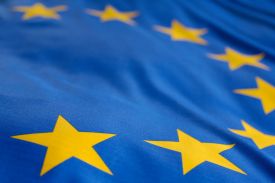
– the flag of the European Union is a blue background with a circle of 12 golden stars. Unlike, for example, the US flag, the number of stars is not related to the number of countries in the Union, but to the magic of the number 12: similar to the 12 signs of the Zodiac, 12 months of the year, 12 Knights of the Round Table, etc;
– the anthem of the European Union was an instrumental version of “Ode to Joy” by Ludwig van Beethoven, written on a poem by Friedrich Schiller;
– the motto In varietate concordia (from Latin – “Unity in Diversity”) emphasizes that the peoples of the continent are united for peace and prosperity, and in this single European family there is a place for different countries and cultures;
– the EU does not have its own armed forces, but most member countries are members of NATO;
– the worldview of the European Union is based on six core values: respect for human dignity, freedom, democracy, equality, law, respect for human rights, including the rights of minorities;
– the population of the European Union is almost 445 million people, and the total nominal gross domestic product is 17 trillion US dollars. This is the third and second place in the world, respectively;
– after the exit of the United Kingdom in 2020, the EU has 27 member states;
– the official currency of the European Union – the euro – was introduced on January 1, 2002. Currently, the euro is the official currency of 19 of the 27 EU countries, and in 6 other European countries;
– in 2012, the European Union won the Nobel Peace Prize.
INTERESTING FACTS ABOUT UKRAINE-EU RELATIONS
– relations between Ukraine and the European Union were launched in December 1991, when the Minister of Foreign Affairs of the Netherlands, as the representative of the EU Presidency, formally recognized Ukraine’s independence in a letter on behalf of the European Union;
– Ukraine’s intention to build relations with the EU on the principles of integration was first proclaimed in the Resolution of the Verkhovna Rada of Ukraine of July 2, 1993 “On the main directions of Ukraine’s foreign policy”;
– the Embassy of the European Commission in Ukraine was opened in Kyiv in September 1993;
– the first legal basis for relations between Ukraine and the EU, which initiated cooperation on a wide range of political, trade, economic and humanitarian issues, was the Partnership and Cooperation Agreement (PCA) of 14 June 1994 (entered into force on 1 March 1998);
– on March 5, 2007, Ukraine and the EU began negotiations on a new agreement between Ukraine and the EU. After several years of negotiations, the political part of the Association Agreement was signed on March 21, 2014, the economic part – on June 27, 2014. On September 16, 2014, the Verkhovna Rada of Ukraine and the European Parliament simultaneously ratified the Association Agreement between Ukraine and the EU. This document, in terms of its scope and thematic coverage, has become the largest international legal document in the history of Ukraine and the largest international agreement with a third country ever concluded by the European Union;
– on June 11, 2017, a visa-free regime with the European Union entered into force for citizens of Ukraine;
– the European Union is Ukraine’s largest trading partner. In 2020, the share of the EU was 40.7%;
– the EU, together with its member states, is the largest donor of humanitarian aid to eastern Ukraine (a total of more than 402 million euros since the beginning of the war in 2014).
On Europe Day, Ukrainians celebrate the day of common values and history of all European nations. We offer all the students to join the celebrations by taking part in a webquest “Europe Day”.
Olena Suprun
Senior teacher of the Department of Foreign Languages